
What is a Watershed? You're Living in One!
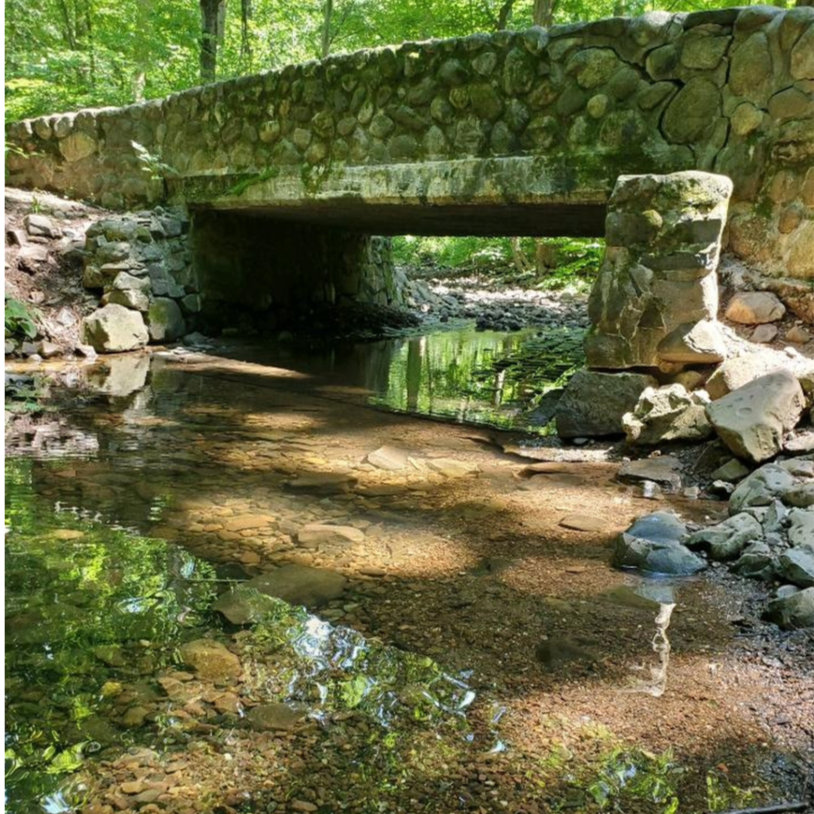
South Mountain Reservation - Hemlock Falls South Orange/Maplewood NJ. Image via Adobe Stock.
How New Jersey's watersheds work, why they matter, and what residents can do to protect them.
By Shane Bagot and D'Arcy Perlman
More than 250,000 vehicles cross the George Washington Bridge each day high above the Hudson River. What many don't realize is that they are looking at part of a much larger system -- one that shapes drinking water quality, flood risk, and ecosystem health across the region. This system includes several watersheds, areas of land that "shed" water from precipitation and streams into a shared river, lake or ocean.
New Jersey has five large watershed regions. The Northeast Watershed region contributes to many waterways, including the Passaic River, Hackensack-Hudson Estuary, and Pompton-Pequannock-Wanaque-Ramapo systems. The four other watershed regions are the Raritan, Northwest, Lower Delaware, and the Atlantic Coastal regions.
To help protect and manage its water resources, New Jersey established 20 Watershed Management Areas (WMAs) through the New Jersey Department of Environmental Protection (NJDEP) in 1996. These management areas provide a framework for monitoring water quality, addressing pollution, reducing flood risks, and coordinating watershed policy across municipal boundaries.
The Northeast region includes several interconnected WMAs within the Passaic River, Hackensack-Hudson Estuary, and Pompton-Pequannock-Wanaque-Ramapo systems. Together, these watersheds encompass streams, rivers, reservoirs, and wetlands that affect drinking water quality for millions of New Jersey residents.
The NJDEP collaborates with a local host agency, a nonprofit, university affiliate, county office, or some other active organization independently funded by the state or federal government, in each of the 20 New Jersey WMAs to facilitate direct public services. These agencies, local governments, watershed associations and community partners use WMAs to track water quality indicators such as bacteria, nutrient levels, stream health, and chemical contamination. The data also helps identify flood-prone areas and informs decisions about stormwater management and land use.
The Rahway River Watershed Association is one of many nonprofit organizations working to protect and restore New Jersey's watersheds. RRWA president Dr. Kirk Barrett, an environmental engineer specializing in water quality and hydrology, says the health of a watershed depends on the everyday decisions made by the people who live within it.
"Among the greatest challenges facing the Rahway River watershed are the impervious surfaces that increase stormwater runoff and flooding, the overapplication of road salt that raises stream salinity, pollutants from tire and brake wear that wash into storm drains, and fertilizers and pesticides that run off residential lawns," Barrett says.
"Residents can play an important role in protecting watershed health," he adds. "Installing rain gardens, reducing the use of lawn chemicals, and managing runoff can help filter stormwater before it reaches streams." Community members can also contribute by participating in watershed monitoring programs, learning to identify local plant and animal species, and reporting observations that help track ecosystem health.
Because watersheds cross municipal boundaries, protecting them requires regional cooperation. Actions taken upstream can influence water quality and flood conditions for communities downstream, making watershed stewardship a shared responsibility rather than one confined to a single town.
Watershed associations often collaborate with riverkeeper organizations, combining education, restoration, advocacy, and community engagement to improve water quality across their regions. The Rahway River Watershed Association itself evolved from an earlier focus on the Rahway River to a broader watershed perspective, reflecting the understanding that protecting a river begins with protecting the land that "drains water" into it.
One organization carrying out that work is the Hackensack Riverkeeper. Founded by Captain Bill Sheehan in 1997, the nonprofit works to "protect, preserve, and restore the biological and recreational resources of the Hackensack River and its watershed."
Sheehan grew up watching the Hackensack River used as a waste dump, at one point being known as one of the most polluted rivers in the country. Decades of industrial pollution had degraded water quality in portions of the Hackensack River. Contaminants including dioxins, PCBs (polychlorinated biphenyls), and heavy metals have accumulated in aquatic organisms such as the blue claw crab.
Since 2002, the Hackensack Riverkeeper has worked to raise public awareness of these risks, establish health advisories for consumption of polluted species, and support efforts to reduce contamination and protect the river's ecological health. But for Sheehan, protecting the river also means addressing a deeper challenge: the public's disconnection from the waterways that sustain their communities.
"Value is something that people understand if it has to do with their bank account or with their personal possessions," he says, "But when it comes to the shared resources that we all have a stake in, people are so willing to turn their back when somebody's doing the wrong thing."
This is the "tragedy of the Commons," when no one "owns" the river, there is no incentive to protect it. For Sheehan, protecting watersheds requires more than government regulations and environmental organizations. It also depends on residents recognizing their role as stewards of local waterways and the land area that supplies their water.
Across New Jersey, watershed associations and management agencies organize river cleanups, educational programs, and volunteer opportunities throughout the year. Residents can also help reduce pollution by properly reducing and sorting household waste (nail polish, paints, automotive products, button batteries, chemical cleaners and lawn treatments, mercury thermometers and fluorescent bulbs should go to Household Hazardous Waste HHW centers), cleaning up litter, limiting the use of lawn chemicals, and choosing alternatives to driving when possible.
To Sheehan, it starts and ends with the people. "When it comes right down to it, what I'm talking about, it's a culture change," he says. "It's time to turn those benches and houses around, and have them face the river."
Shane Bagot is a freelance journalist and Rowan University journalism graduate whose work has appeared in The Village Green and Follow South Jersey.
D'Arcy Perlman is a plant biologist and UCLA graduate based in Maplewood, New Jersey, with research experience in ecology, conservation, and regenerative agriculture.