
Jennifer Houghton Hit the Road for Long-term Forest Health in British Columbia
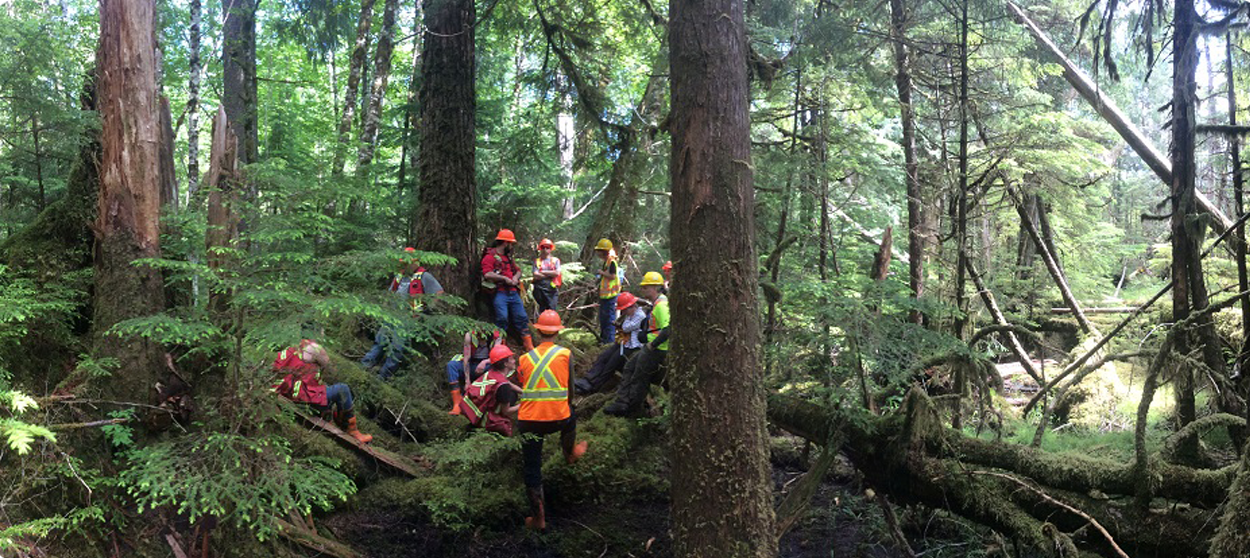
Photo by the Government of British Columbia
By D'Arcy Perlman
Jennifer Houghton, campaign director for the “New Forest Act” project in British Columbia, recently completed a 12-community “road show” of public town halls to introduce the legislative framework across the province. Alongside Dave Weaver, a former forestry professional and co-developer of the proposal, Houghton presented the rationale for fundamental change in British Columbia’s forest laws and mediated lively Q&As, fostering hope amidst skepticism.
Rather than writing another report criticizing the existing system, Houghton sought a solution.
"We wanted to move the conversation from 'what's wrong' with current British Columbia Forest Law to 'what replaces it,” said Houghton in a recent phone interview.
What started as an effort to understand why her community repeatedly flooded ultimately led her to the realization that new laws were needed to redefine how British Columbia values and manages its public forests. After the catastrophic 2018 flood in Grand Forks evacuated her home and hundreds of others, Houghton searched for answers in her community. A local forest ecologist showed her aerial images of the surrounding watershed, where an astounding 60 to 70 percent of the previously forested landscape had been clear-cut.
Houghton looked further across British Columbia and found many organizations working to protect watersheds and promote flood resilience, clean water, and biodiversity. But each group was met with the same frustration – no protection for the primary forests that naturally provide the ecosystem functions they depend upon.
"The roadblock we were all hitting is the legislation,” she explained. “The whole system was built for industrial extraction. The forestry legislation not only allows industrial extraction on public land, but encourages it.”
That realization shifted Houghton's focus from watershed restoration to forest policy.
Most of British Columbia's forests are governed by the provincial Forest Act and related legislation. Because approximately 95% of British Columbia is publicly owned Crown land, fundamental changes to provincial legislation could reshape how most of BC's forests are managed.
Working through the nonprofit Boundary Forest Watershed Stewardship Society based in Grand Forks, Houghton gathered legislative experts, scientists, foresters, rural residents, and members of Indigenous communities to help draft the New Forest Act - an entirely new legislative framework for forest governance that could eventually be introduced as a bill.
Houghton explains that the New Forest Act organizes forest governance around three core priorities:
1) Ecosystem integrity: forest management that prioritizes maintaining ecological function, allowing timber harvesting within ecological limits. A Protect-Restore-Harvest model would permanently protect remaining primary forests, restore degraded forests, and concentrate regenerative timber harvesting on previously logged secondary forests.
2) Community-based decision-making: Community Forest Boards and Indigenous Knowledge Panels would integrate local forest monitoring, planning and stewardship.
3) Community-based economies: The forests would be reimagined as public infrastructure. Rather than “sources of timber,” it frames them as essential, living systems that protect drinking water, reduce flood and wildfire risk, store carbon, sustain biodiversity, and support recreation and rural economic opportunities.
Feedback during the 12-community tour throughout June 2026 reinforced that people from many different backgrounds believe British Columbia's forest laws need fundamental reform.
“We found quite a bit of agreement across very different audiences, whether they’re conservationists or retired foresters, business owners, local elected officials, and many people working in forestry,” Houghton said. “Sometimes they disagreed about the details, but they shared the view that the current system isn’t working.”
Houghton and Weaver's next step is an invitation to meet in August with British Columbia Minister of Forests Ravi Parmar and Minister of Water, Land and Resource Stewardship Randene Neill to present the New Forest Act and discuss its path forward. Rather than expecting immediate legislative action, Houghton said the meeting is intended to begin a long-term conversation about how British Columbia's forests should be governed.
"We want to leave them thinking, 'This isn't another protest group; they've done serious policy work,'" she said.
Although the New Forest Act was developed for British Columbia, Houghton believes the proposal raises broader questions relevant to forest governance throughout North America and around the world.
"What kind of institutions are capable of governing forests for the full public interest rather than continuing to organize everything around timber supply?" Houghton asks. "The real question is for all of us.”
D'Arcy Perlman is a plant biologist and UCLA graduate based in Maplewood, New Jersey, with research experience in ecology, conservation, and regenerative agriculture.