
New Jersey Pioneered Using Insects to Control Invasive Plants, Other Locales Are Getting the Bug
By Davian Arroyo
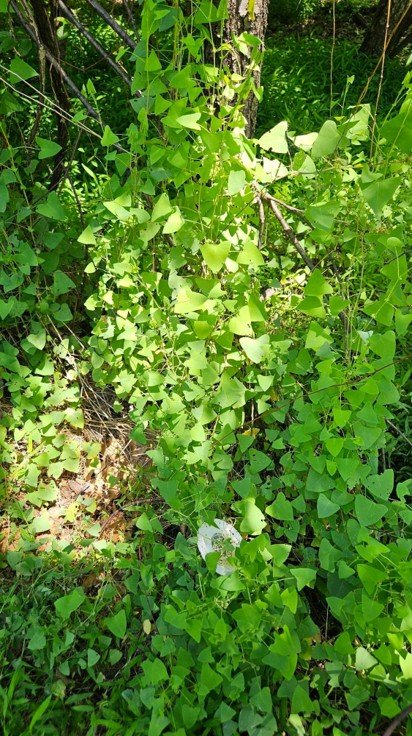
Photo credit - Aleshanee Mooney
Early on a recent morning, wildlife biologist Aleshanee Mooney headed out to the former Erie Landfill site in the New Jersey Meadowlands with a plastic container full of hungry weevils, clamoring to be free.
Mooney, a field ecologist with the Meadowlands Research & Restoration Institute (MRRI), unleashed the insects on a thicket of mile-a-minute weed—an invasive plant that chokes out the native grasslands she’s trying to restore in the Lower Hackensack River.
“We purchase thousands and thousands of these little tiny weevils and set them out so that they do their work on the plants,” Mooney says.
Mile-a-minute weevils are small beetles that feast exclusively on the leaves of the mile-a-minute vine. Adults lay their eggs on leaves and stems of the weed, which ultimately weakens them and causes them to die back. The beetles are an important tool against this pesky plant, which can quickly choke out useful native species.
New Jersey is a pioneer of sorts when it comes to this kind of biocontrol. The state has a 21,000 square foot insect-rearing facility in Trenton that breeds weevils and other specialized plant-eaters. The Phillip Alampi Beneficial Insect Rearing Laboratory conducted the first field releases of weevils in the country just after they were approved for this use by the USDA in 2004. Since then they’ve released more than a million weevils.
Biocontrol projects like these have recently gained traction with conservationists eager to defend their local ecosystems from invasive plants.
In June, a cooperative of three Michigan counties released 4,000 weevils across four infested sites. That made Michigan the 12th state to use weevils from the New Jersey lab in their biocontrol programs.
As mile-a-minute has spread throughout the Northeast and jumped to the Midwest and even Oregon, there’s been an increasing demand for the bugs.
Mile-a-minute are annual vines that quickly carpet wetlands, riverbanks and floodplains as well as roadsides, forest edges and open fields. The plant has triangular leaves that resemble spearheads, purple berries and thorny stems, which make it hard to weed by hand. They can grow up to six inches a day, so they’re extremely hard to control.
“They could swallow up a habitat. You could have an area that looks lush and green to the eye, but it's full of invasive plants,” said Don Torino, president of the Bergen County Audubon Society.
He says invasive plants are a threat to native habitats because they don’t provide the nutrition that native insects and birds need.
“It would be like if you're hungry and you go into a ShopRite and all the fruit is plastic,” he said. “It’s the same as a bird coming into a habitat where everything is green but all the plants are invasive. They might as well be plastic.”
Torino says nothing makes as immediate of an impact as a volunteer armed with a shovel. To him, biocontrol and other methods are part of the fight, but getting people to follow through with consistent maintenance remains the biggest hurdle to restoration efforts.
But advocates of these programs say they provide excellent results with minimal risk.
Mooney has released thousands of weevils in various areas of infestation in the Meadowlands over the last five years. She is using them as a kind of ‘spot treatment’-- something to quell growth before they spread. Although the weevils are a non-native species, she expects them to die off once temperatures begin to decline.
“They don't reproduce here. They don't survive the winters here. Once they've done their job, there's no risk of them becoming overpopulated,” Mooney said.
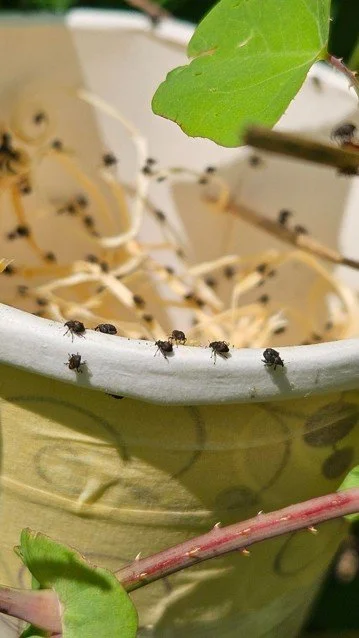
Photo Credit- Aleshanee Mooney
The New Jersey Department of Agriculture coordinates with local and federal entities, evaluating insects based on their efficacy against an invasive species and the potential to cause further environmental harm. Selected species undergo careful consideration of their potential to become invasive themselves.
The USDA requires a special permit for any organization looking to release a biological control agent, like weevils. These permits ensure there are safeguards for proper shipment, containment and destruction of biocontrol agents after the target invasive has been eliminated.
Every season, New Jersey residents can register with the state biocontrol program for a 50% discount on their first 500 weevils. Entomologist Cynthia Detweiler-Hill runs the mile-a-minute weevil program at the Phillip Alampi Beneficial Insect Rearing Laboratory. She said that demand exceeded production this year and they had to start a waitlist. The weevils are available to private landowners, including home gardeners, as well as organizations.
“Everyone has the opportunity to submit the order form on our website and receive weevils on a first come, first serve basis,” Detweiler-Hill said via email.
As for new invasive-eaters in the pipeline, all new biocontrol agents must be quarantined and rigorously tested by USDA and university research laboratories before they are permitted for release in the United States, she said.
The research takes years to complete, so gardeners and restoration ecologists will have to look out for the latest insect that they might add to their toolkit.
Davian Arroyo is a Scripps-Howard fellow at CivicStory and a student at Drew University.