
A New Voting Age? What New Jersey's "Primary Law" Means for 17-Year-Olds
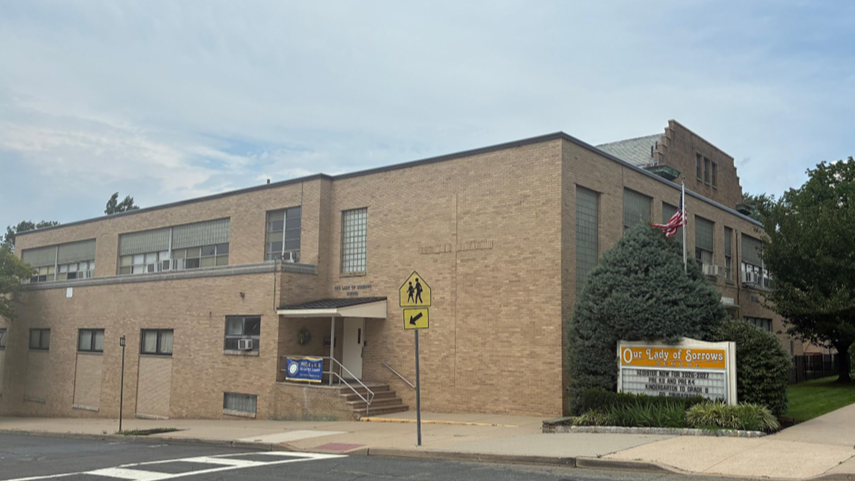
Our Lady of Sorrows School in South Orange, New Jersey. Photo by Maddie Popowsky
By Maddie Popowsky
Emmett Simon walked into Our Lady of Sorrows School in South Orange, New Jersey on June 3 and voted for the first time. The 17-year-old said it was "less complex of an experience than [he] thought it would be."
The New Jersey New Voter Empowerment Act, which took effect Jan. 1, allows 17-year-olds who will be 18 by the November general election to vote in the June primary election.
Bill A3690 was passed by the New Jersey State Legislature in December 2023, and signed into law by former Gov. Phil Murphy in January 2024. The purpose of the law was to increase voter participation.
New Jersey, like much of the country, suffers from low voter turnout. In the 2025 general election, only 51% of registered voters showed up to the polls, and only 23% of voters cast ballots in the 2026 special election for the empty 11th District House seat. In previous elections, only about one-quarter of the state's over six million registered voters cast ballots in statewide elections, according to NJ.gov.
The epidemic of low voter turnout has been attributed to several factors. Some eligible voters face barriers to participation or lack access to civic education. This disproportionately affects young people, especially Black and Latino voters, according to a Tufts CIRCLE study.
Many voters feel that their votes don't matter, or only vote in so-called "important" elections, like the presidential election. However, every election is important, and many are decided by only a few votes, per a Center for American Progress report. Local elections are especially influential on residents' daily lives, giving voters a direct opportunity to impact decisions in their own communities, according to Nonprofit VOTE.
When Simon's mother told the poll workers that he was a first time voter, "they announced [it] to the entire room, and everyone started cheering, which was a little embarrassing." But after that, "the voting process itself was pretty simple." All he had to do was "sign some papers and then fill in the bubbles."
Despite the embarrassment, Simon knew how important it was for him to vote. Growing up in Maplewood, he mentioned how "it's kind of ingrained in all of us that voting's our baseline civic duty, and I kind of still carry that with me."
Stephanie Rivera, the AP US Government & Politics teacher at Columbia High School, said she is eager to get young people into the voting booth.
"Seeing the different ways that young people can make a difference really inspired me to pursue teaching civics and teaching political science," she said. When she hears about her students voting, it feels "just as good as when [they] get a 5 on the AP exam."
However, Rivera added that having a new law is not sufficient to increase voter participation. "The spread of information prior to the election is just as important as this law being implemented," she said.
Luckily, several local and countrywide resources have been created for voters, especially young voters.
SOMA Action publishes a voter guide before every election that informs voters of candidates, the offices they're seeking, polling locations, the organization's own endorsements, and more. Students for Justice, a student-run club at Columbia High School, hosts events that encourage civic engagement, including opportunities for eligible students to register to vote. In the past, the club has organized coat drives, rallies, and open discussions with students and voters. Any CHS student can join the club, and meetings are held every Monday in Room A207.
Ballotpedia also provides information about each candidate on the ballot, and most candidates have websites that detail their policies and goals.
Young people can also get politically involved by canvassing for candidates (reaching out to potential voters), volunteering at polling locations, attending rallies, or simply informing other peers.
However, voting is just as important as any of these. As Simon said, "I don't think [voting] is the only thing we should be doing, but if you don't vote, there's no chance you're going to get what you want out of government."
Maddie Popowsky is a rising senior and student-athlete at Columbia High School with a passion for political science and community involvement. She is a participant in CivicStory’s Summer Newsroom program.